
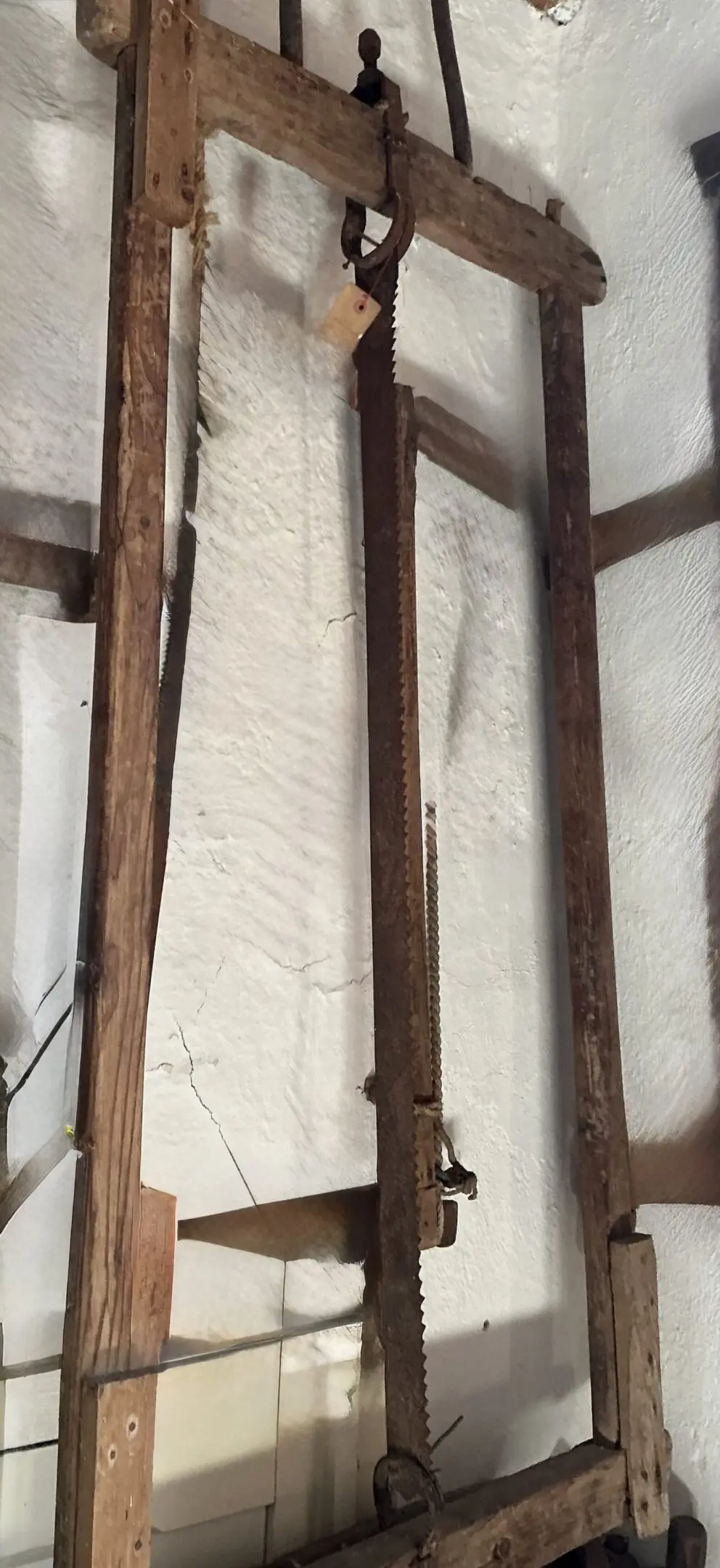
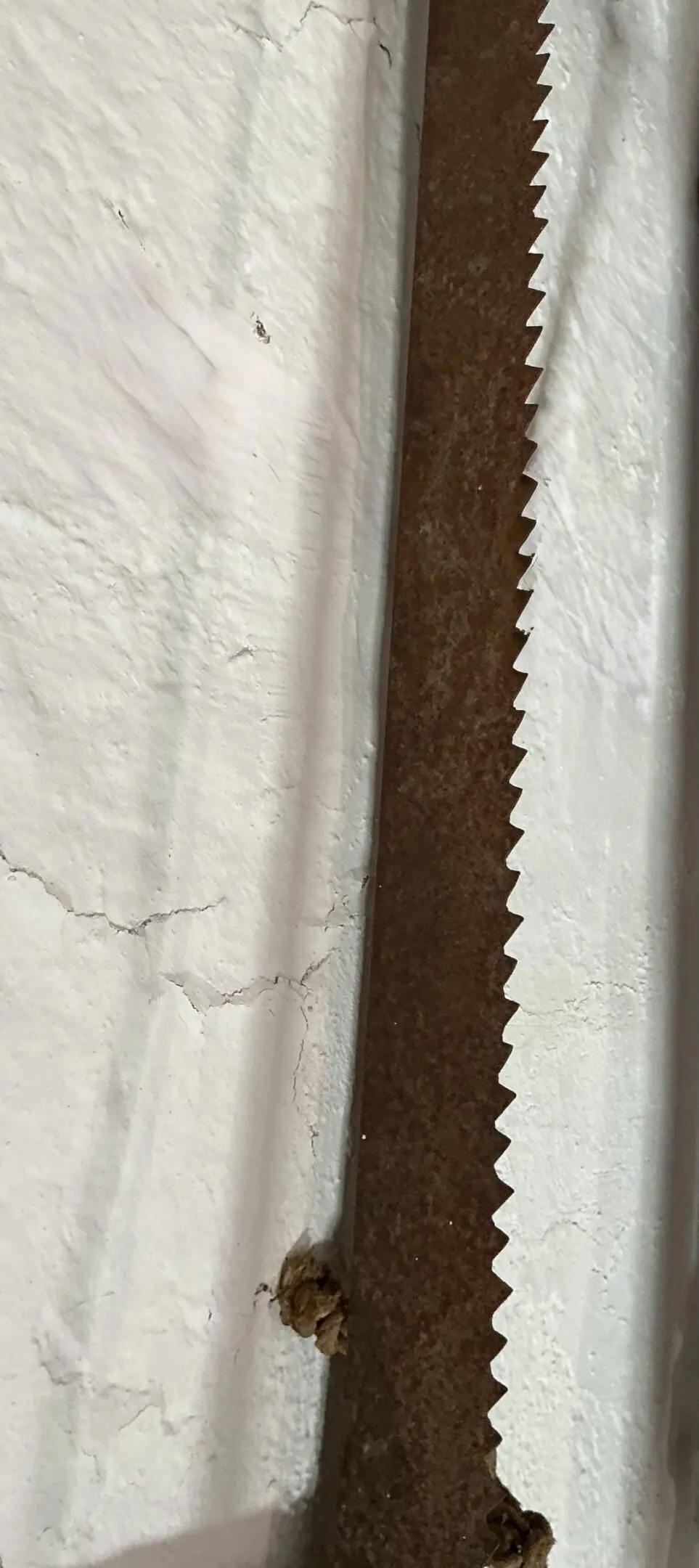

A wood cutter used by two people.
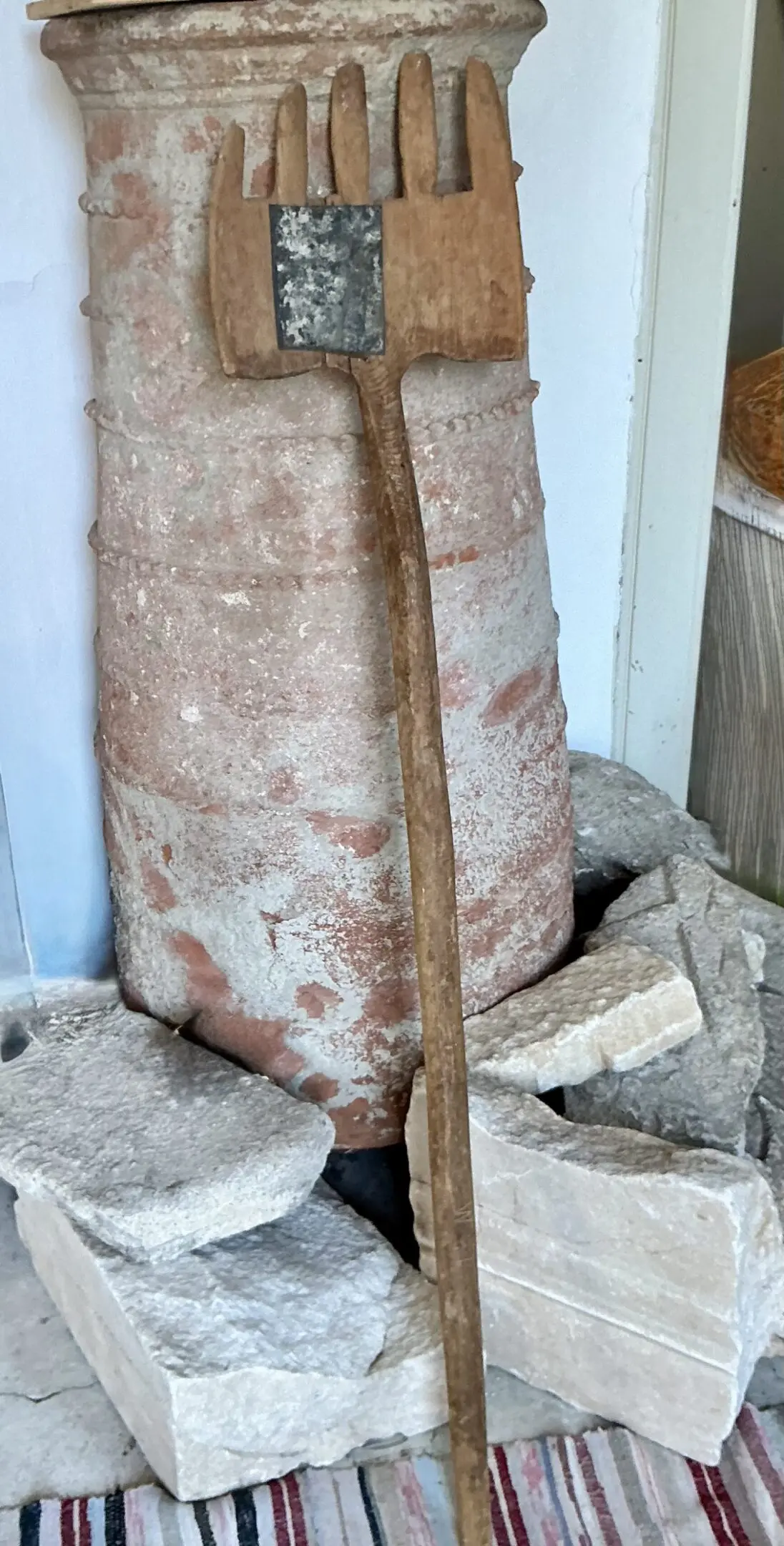
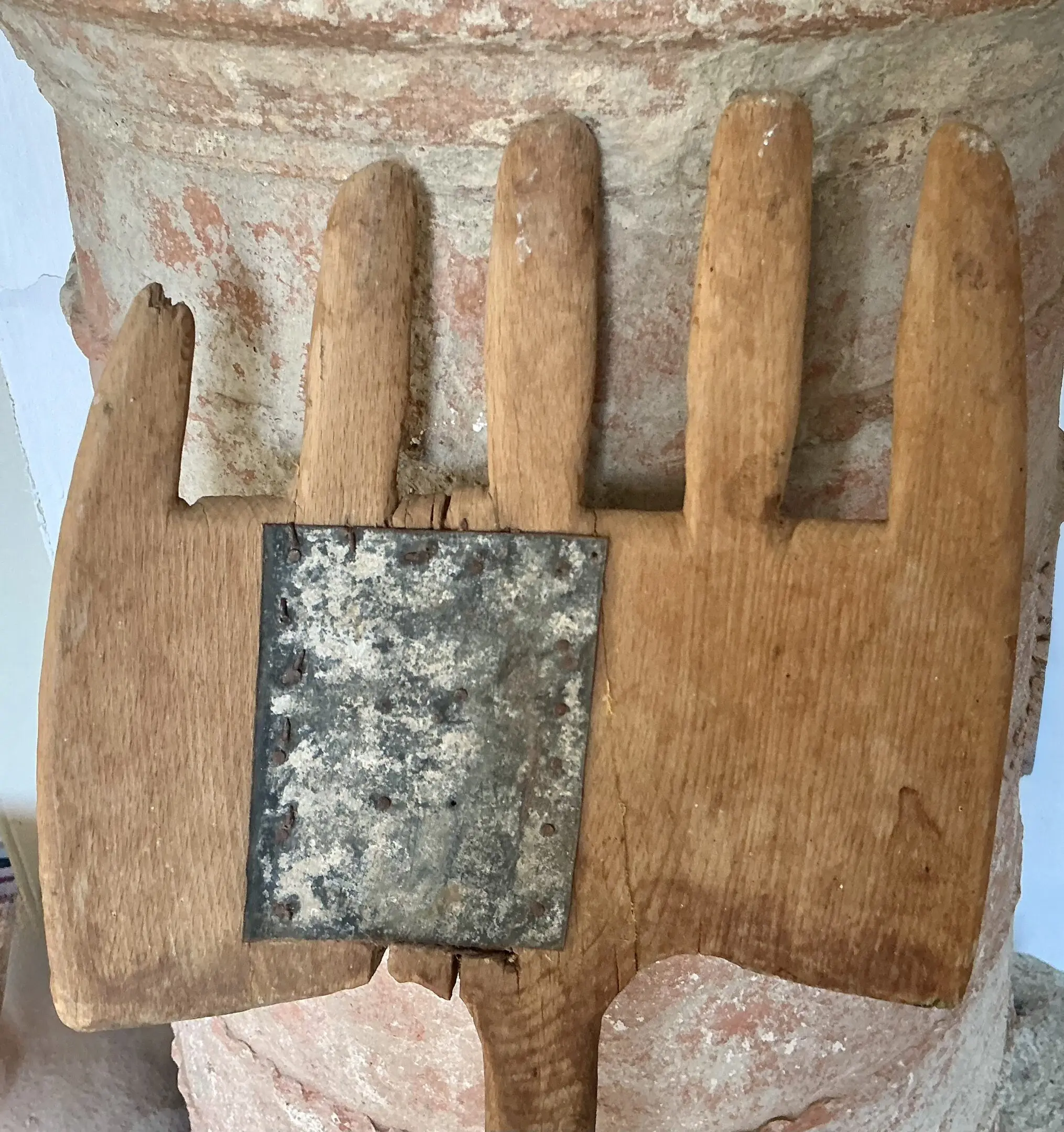
Handmade wooden threshing tool used, with the force of the wind, to separate straw from grain. The metal sheet and nails were added later to repair a crack in the wood.
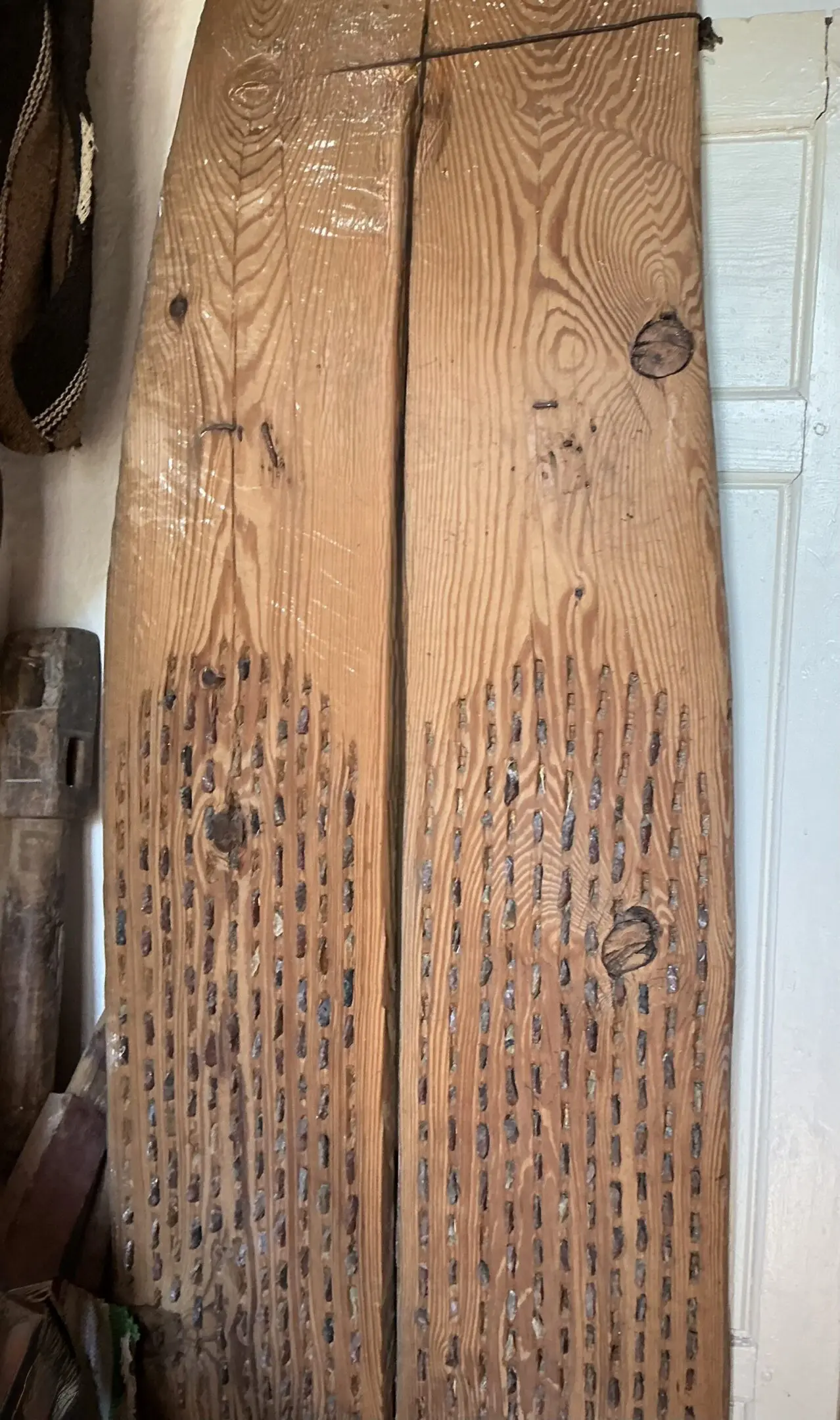
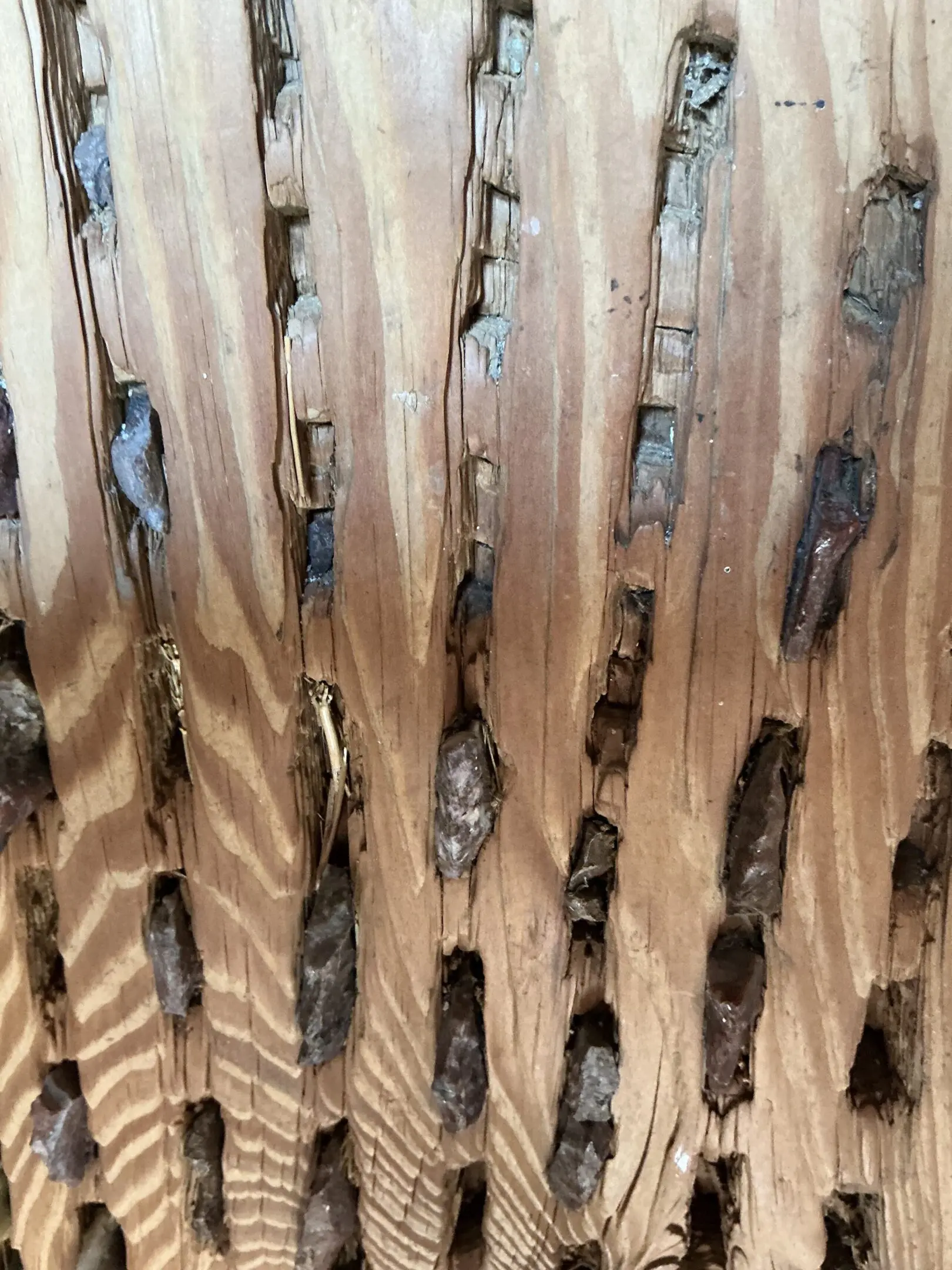
Douyeni
in the Mesopotiko dialect. An agricultural tool for threshing. It was pulled by a horse, mule, or donkey. Locally sourced pointed stones made of sharp gravel rock were embedded on the lower surface by special craftsmen. These stones pressed and cut the ears of corn.
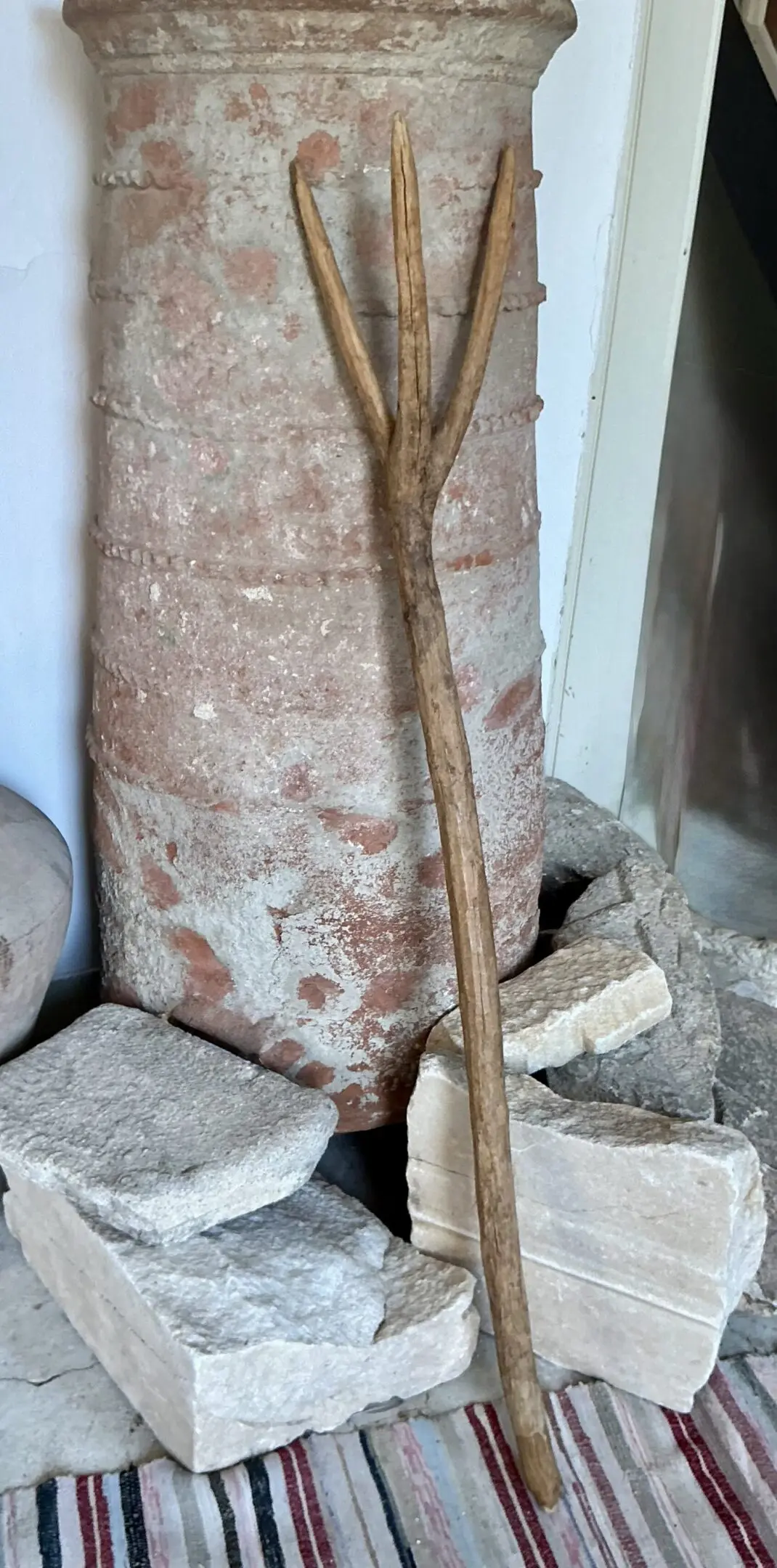
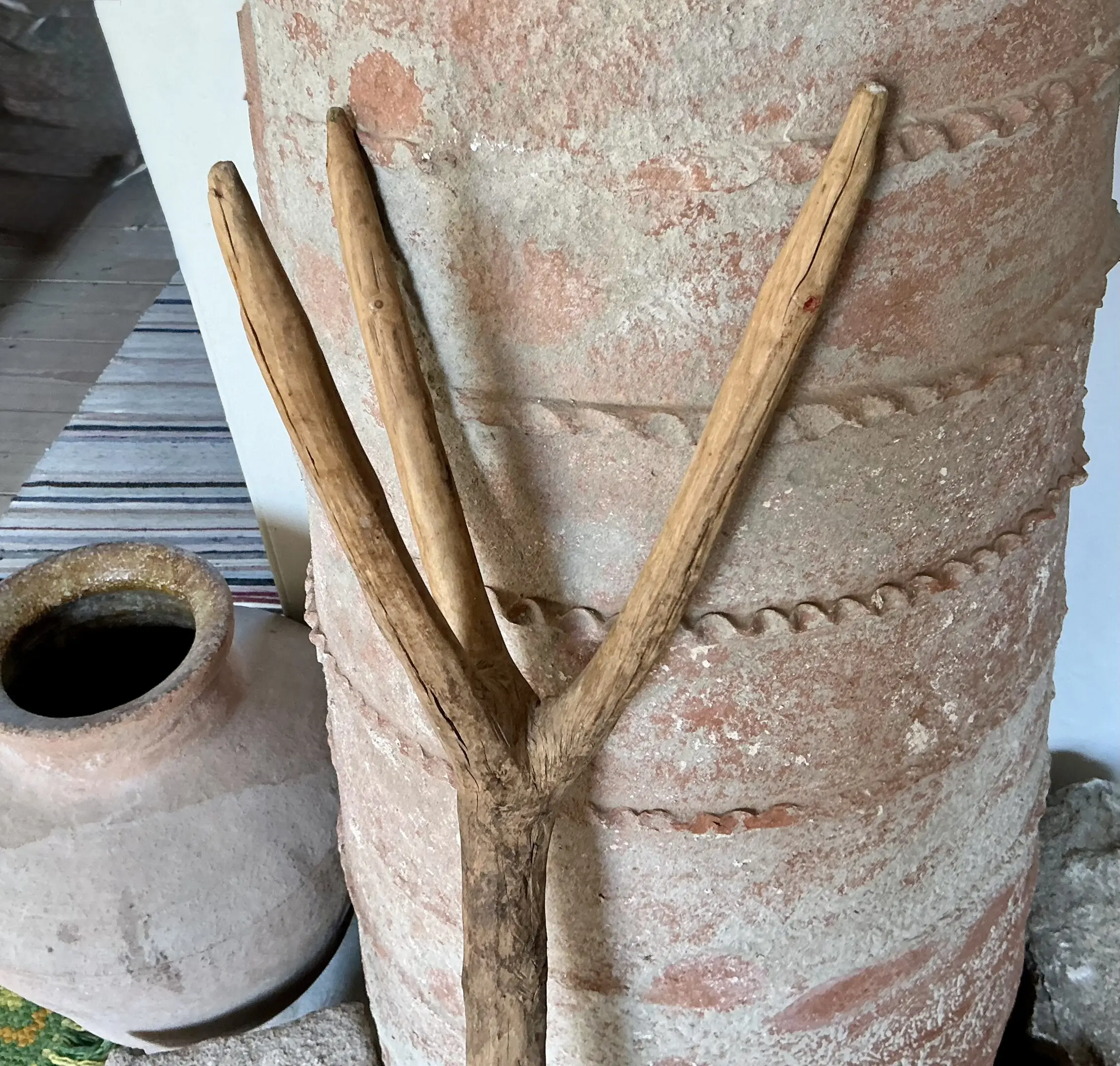
Wooden tool fashioned from tree limbs. Used to turn the ears of corn in the threshing process.
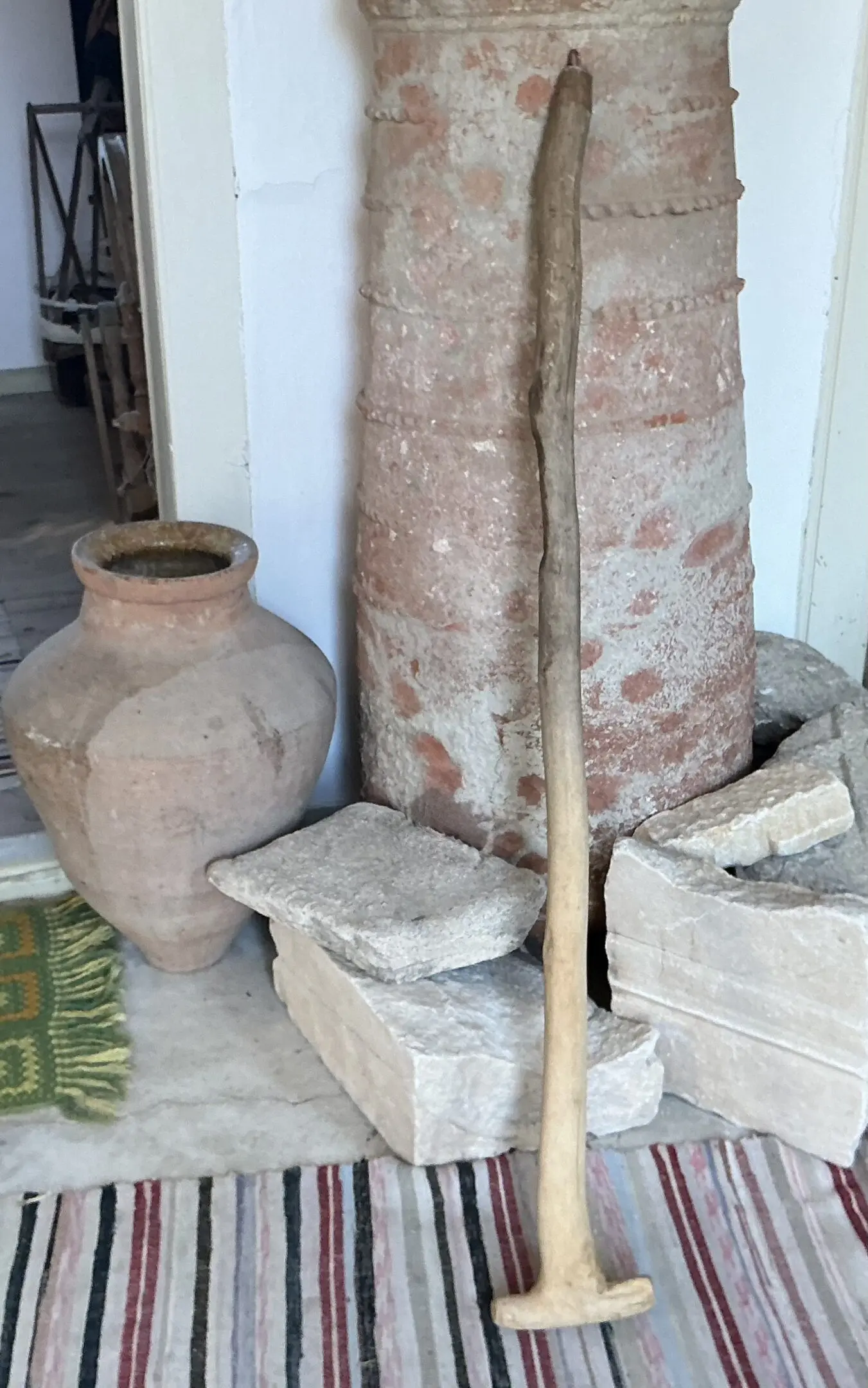
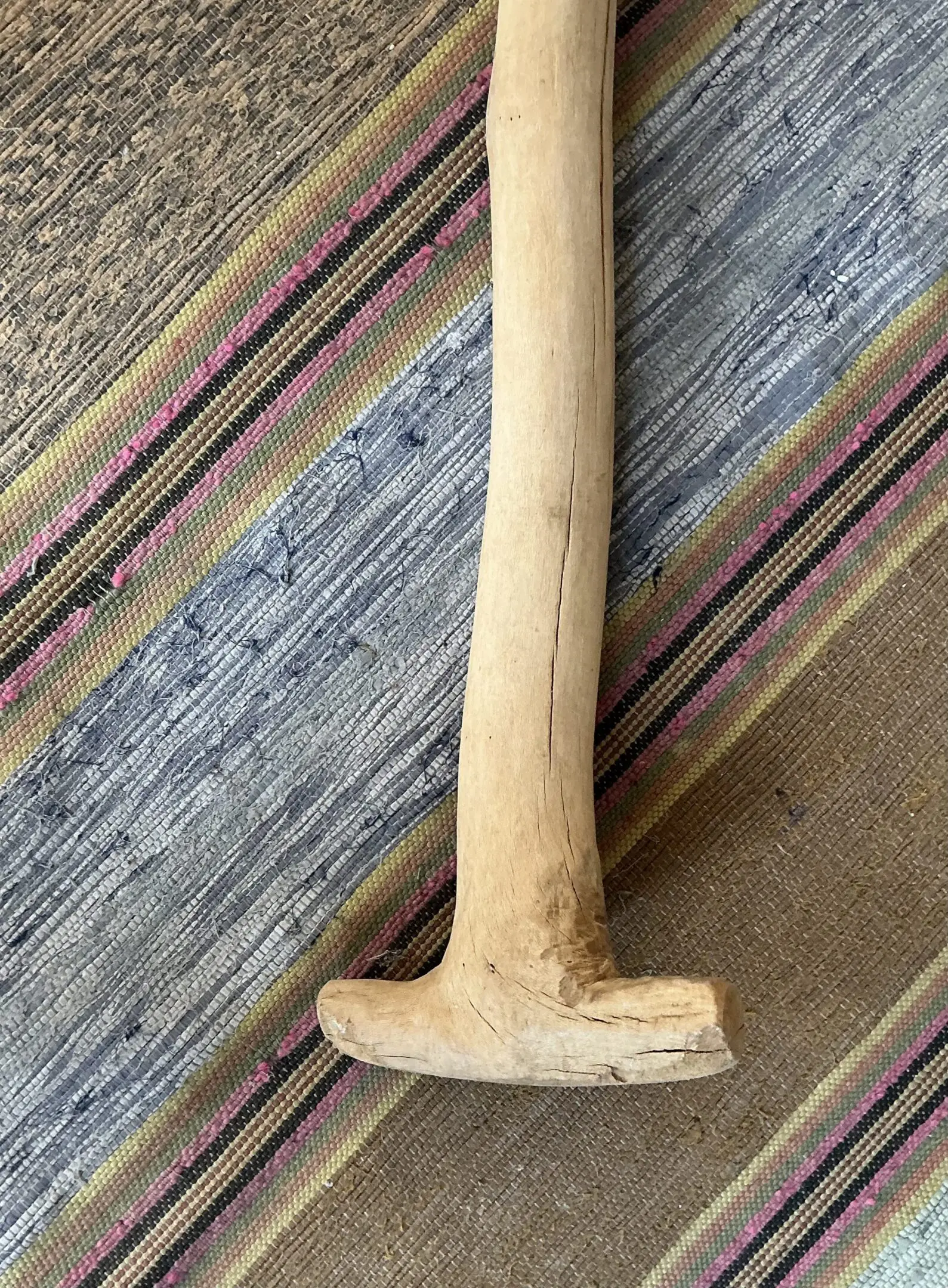
Small wooden handmade paddle. Used to stir milk in a cauldron.
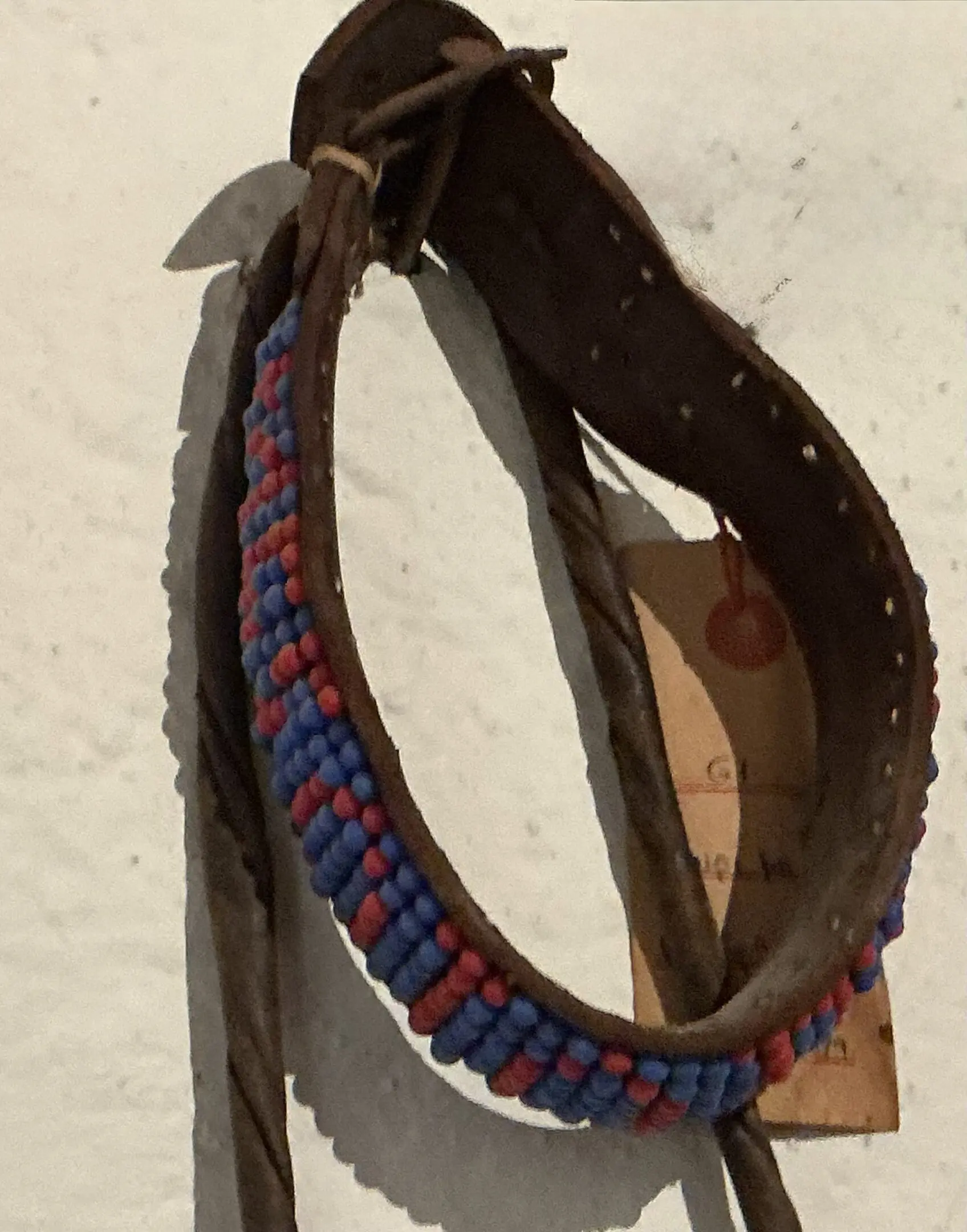
Haimeline
in the local Mesotopiko dialect. Halters made by the village craftsmen. Worn around the sheep's neck.
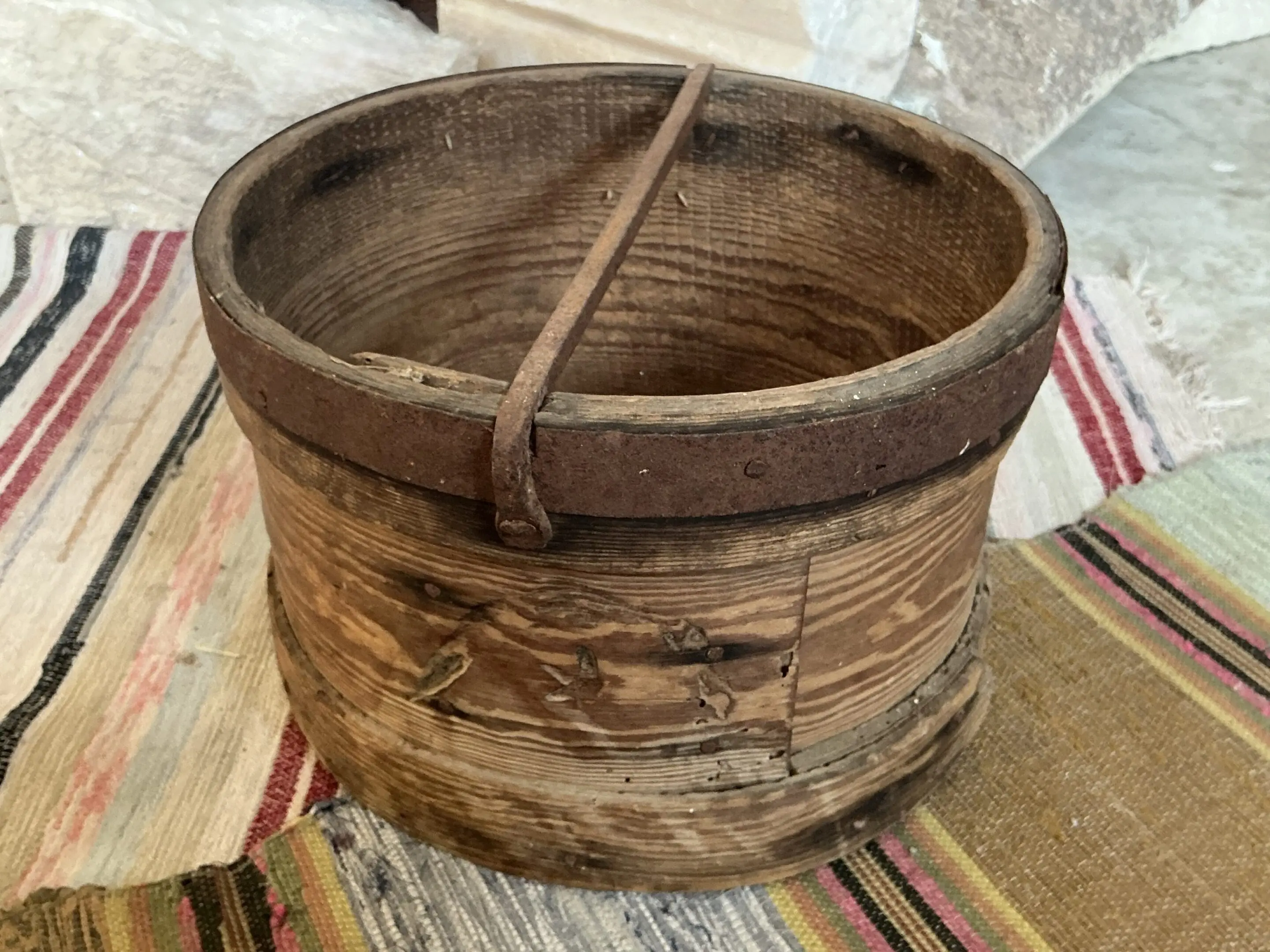
Unit of measure for volume of dry goods such as grain or wheat.
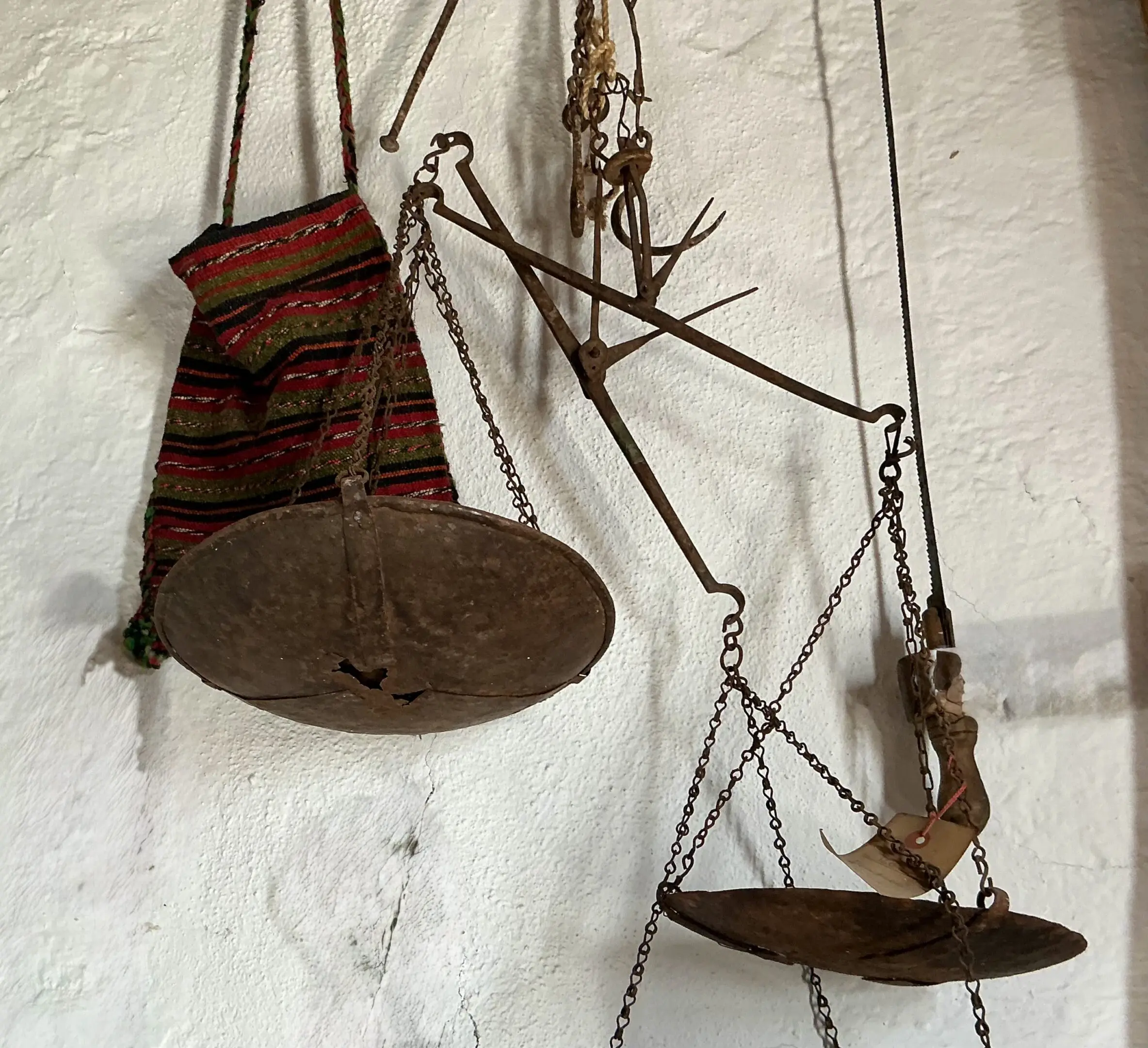
Scales used by fishermen, peddlers, and greengrocers to weigh small quantities of goods between 1-5 kilos.
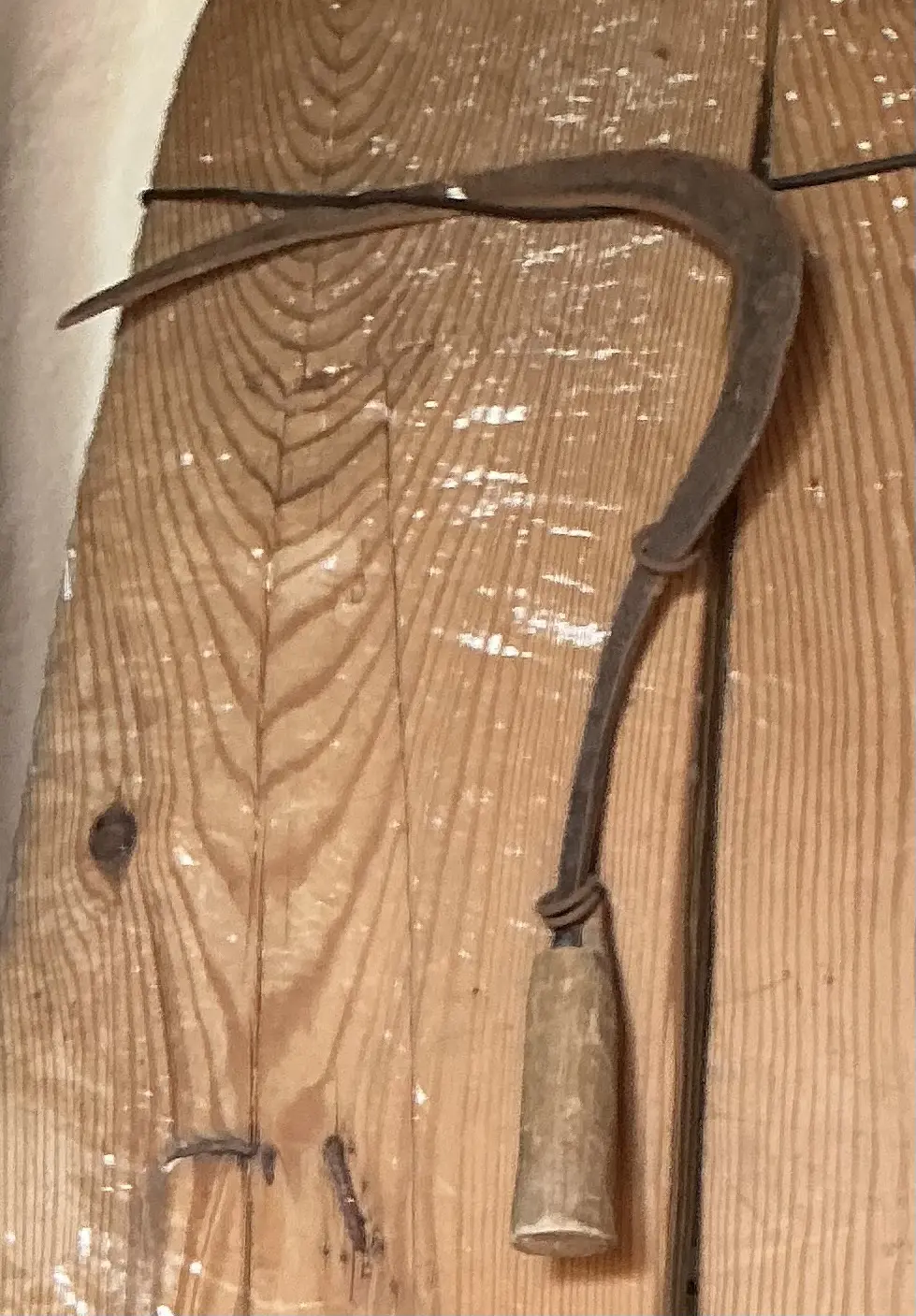
Drepani
in the local Mesotopiko dialect, or sickle. An agricultural tool with which farmers would reap the harvested ears of corn in the field.

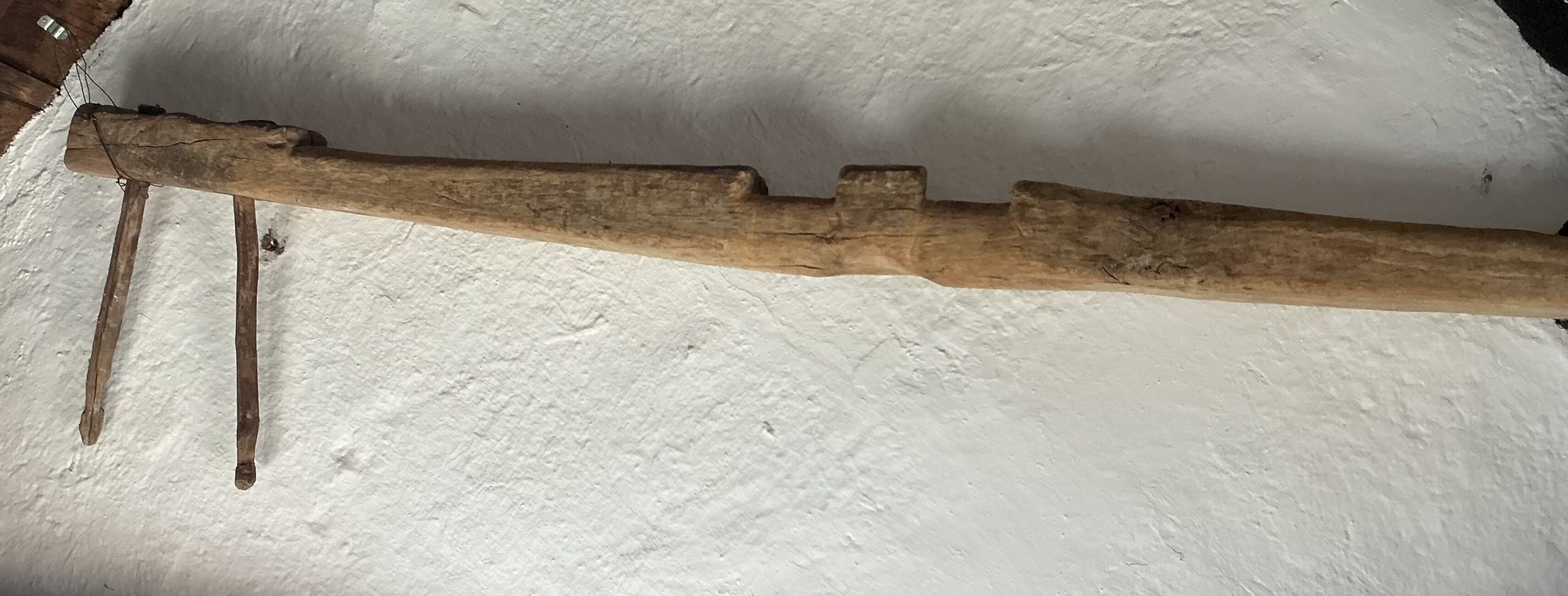
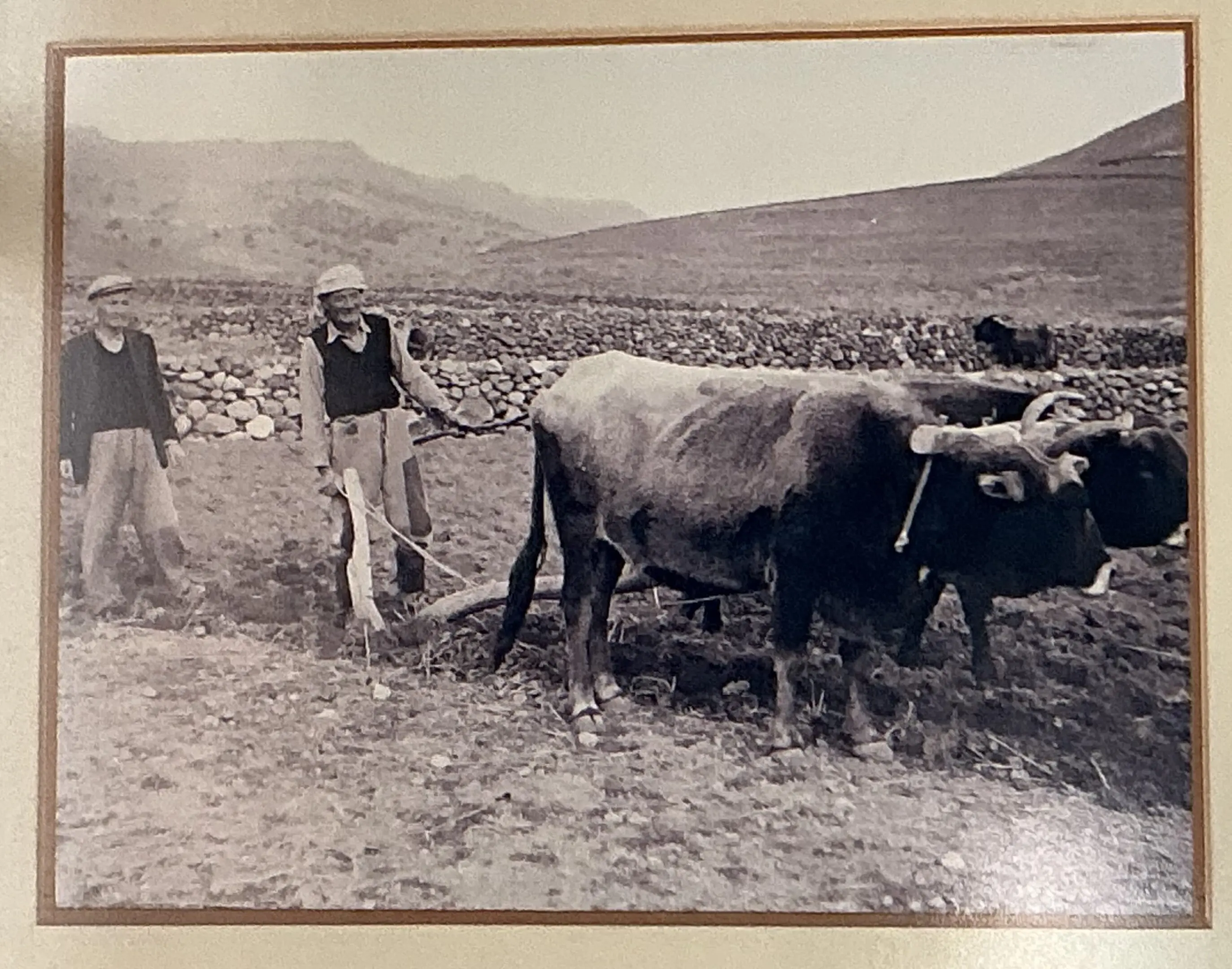
Yoke used in plowing. Placed on neck of two animals so that they would move together and coordinate as they plow.
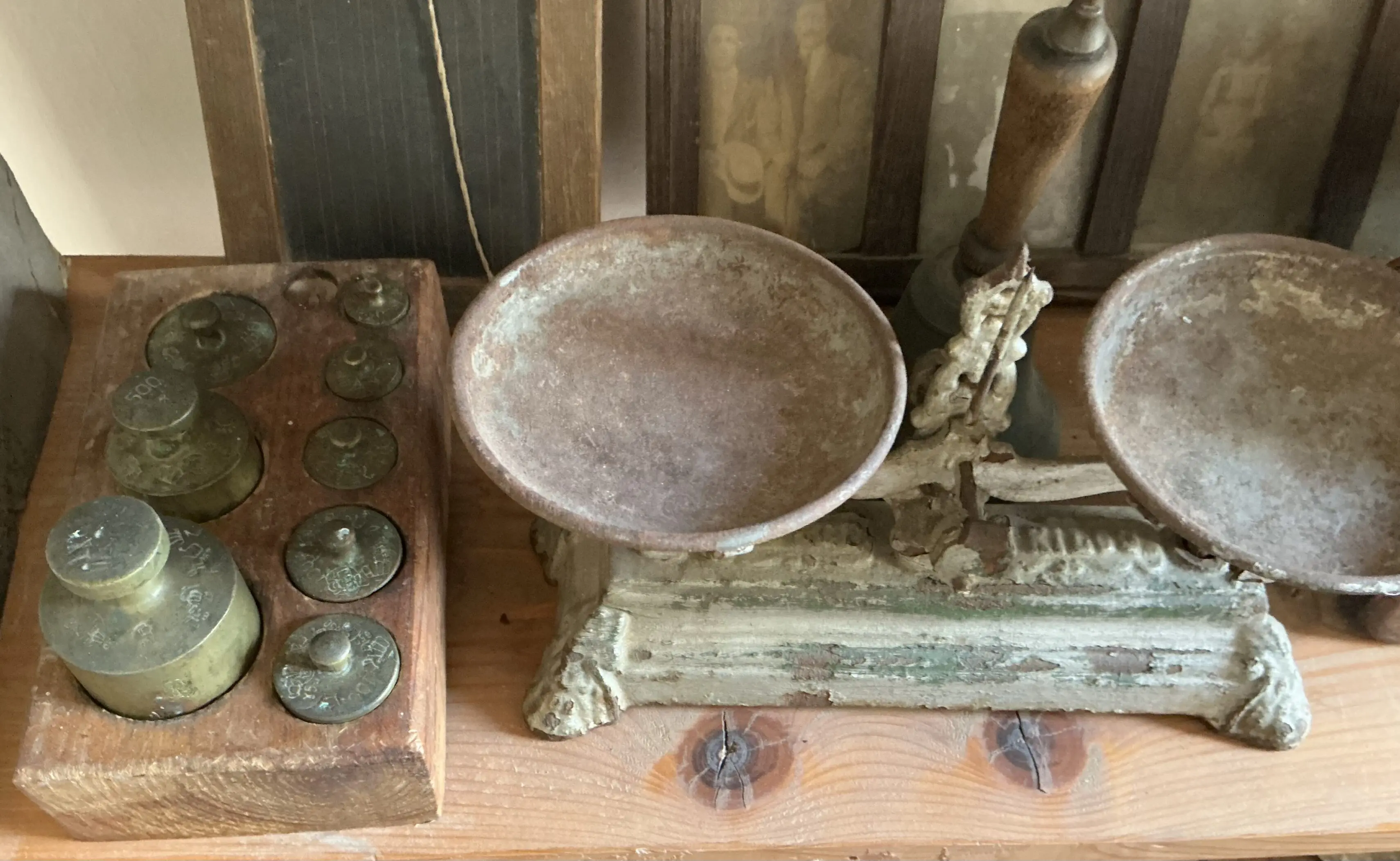
Scale used in a grocery store with weights in grams.