
Brief History of Mesotopos Village
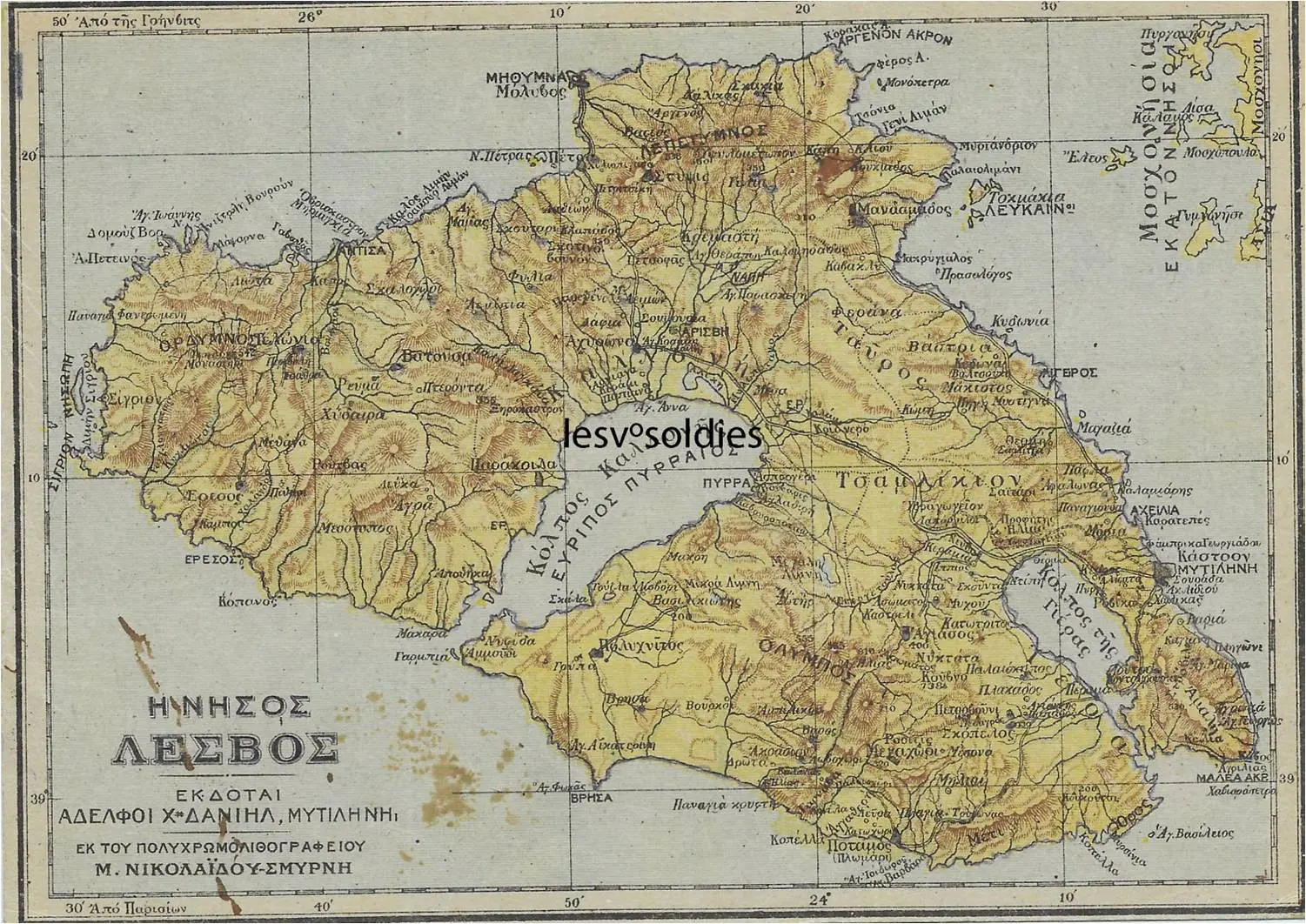
The island of Lesvos, Greece is located in the North Aegean Sea. The area of the island is approximately 631 miles with 249 miles of coastline. The port city of Mytilene is the largest city on the island and the capital. One-third of the population (83,755 in 2021) lives in Mytilene. The remaining two-thirds live in very small towns and villages scattered throughout the island.
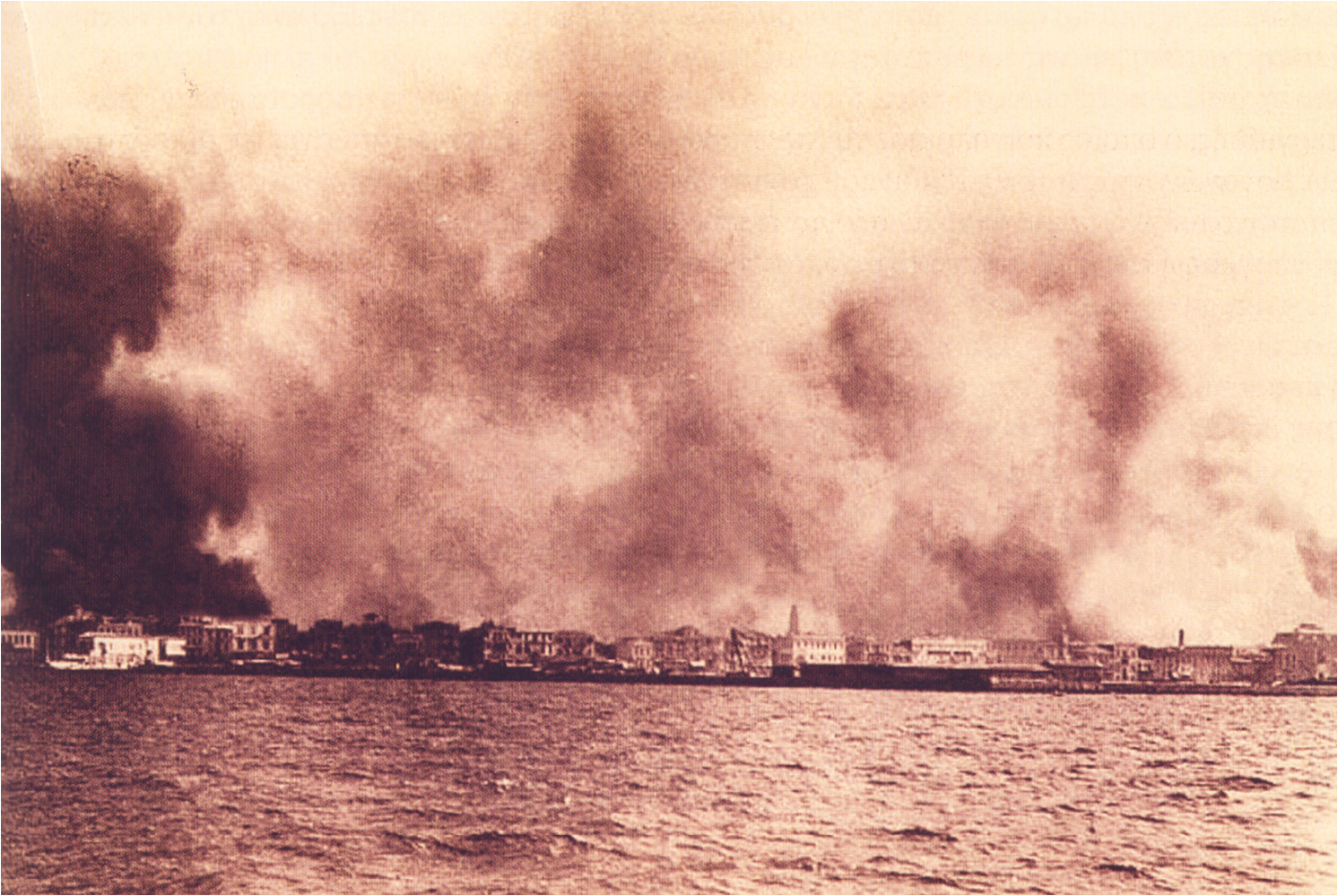
Lesvos is located 23 miles away from Turkish mainland. Most significantly, the ports of Mytilene and Smyrna, Turkey are only 140 miles apart. Smyrna thrived as cosmopolitan mecca of trade and culture from the 7th century BCE until it was destroyed by a great fire of 1922. Called the "Paris of the East", it welcomed people from all over the world. Trade between Lesvos and Smyrna was crucial for the prosperity of the inhabitants of Mesotopos.
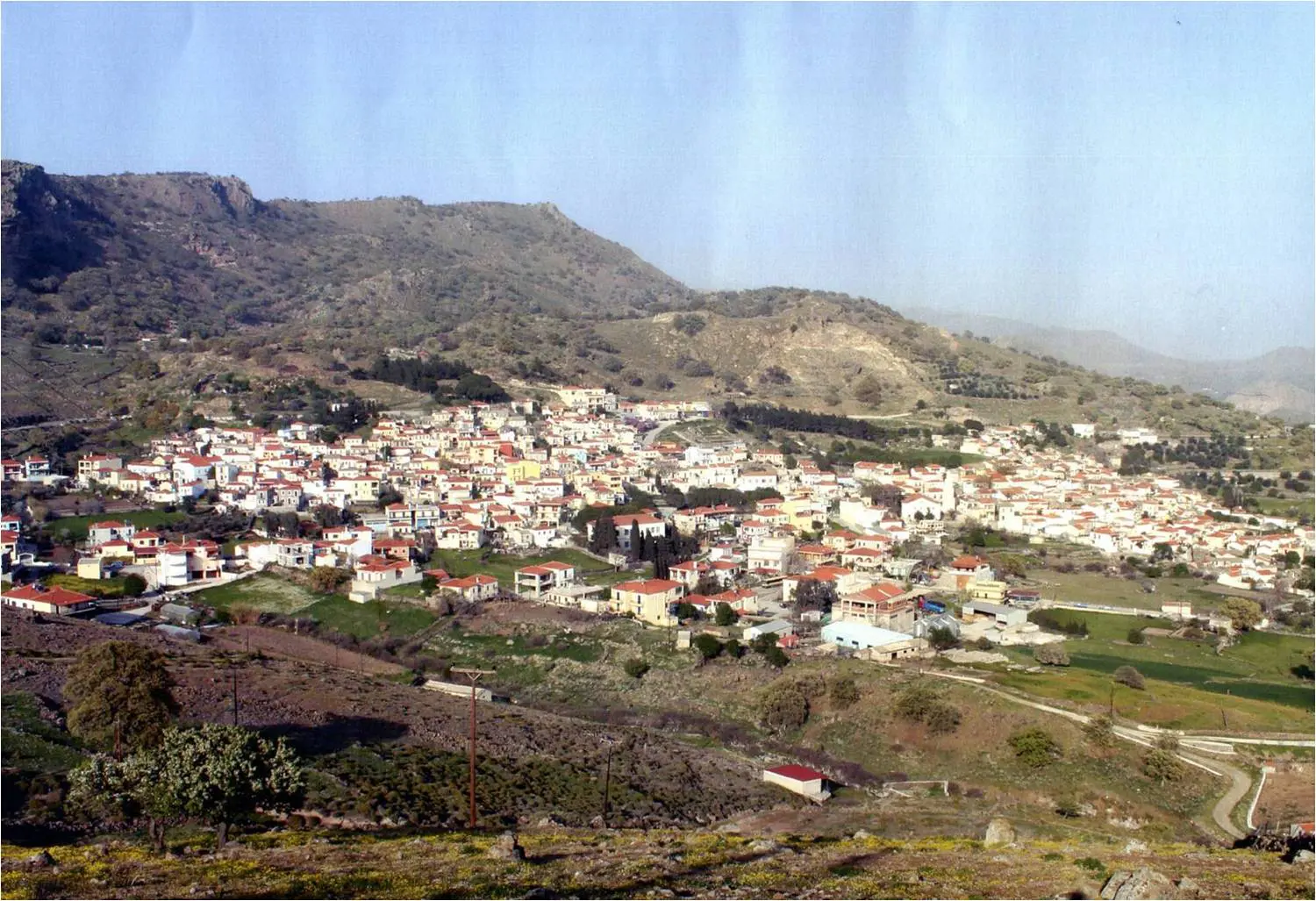
The village of Mesotopos is in the southwestern part of Lesvos, approximately 45 miles from Mytilene. In 2021, the permanent population of Mesotopos was 690, with approximately 1300 seasonal residents. The name Mesotopos means “middle place” and was probably chosen because the village was situated between two previous settlements. Mesotopos dates to at least the middle of the 17th Century.
Mesotopos was ruled by the Ottoman Empire from 1462 until 1912. During this period, the island remained Greek Orthodox with a minority Muslim population. Most island inhabitants became bilingual in both Greek and Turkish and continued to trade with Turkey.
A written history of Mesotopos begins around 1860 when the village school was built. In 1870 the reconstruction of the Church of Panagias was completed, the original had been destroyed by fire. In 1894 a second school was constructed. From 1904-1911, the roads to neighboring village Agra and Port Tavari were finished, the first bell tower of the Church of Panagia was built, and the first sewer network was installed. All these works were completed while Mesotopos was still under Turkish occupation. Prosperity like this throughout the island contributed to Lesvos not participating in the Greek War of Independence against the Ottoman Empire which started in 1821.Though most of Greece officially gained independence in 1830, Mesotopos was not liberated until November 8, 1912, during the First Balkan War.
The Catastrophe of Smyrna in 1922 had a devastating effect on Mesotopos. A raging fire began on September 13 and destroyed the parts of Smyrna occupied by Greeks and Armenians. In the weeks leading up to the fire, Turkish troops committed massacres and atrocities, including rape and murder, against the Greek and Armenian population of the city. The fire lasted ten days and killed an estimated 100,00 people in addition to displacing approximately 180,000 Greeks. The destruction was of epic proportions. Life in the village became increasingly difficult. Trade with Turkey had ended and the village population exploded with refugees.
By 1925, inhabitants were leaving Mesotopos and moving to Athens, the United States, and Australia for employment opportunities. Many men found work as craftsmen. A second wave of immigration, mostly to Athens, began after World War II.